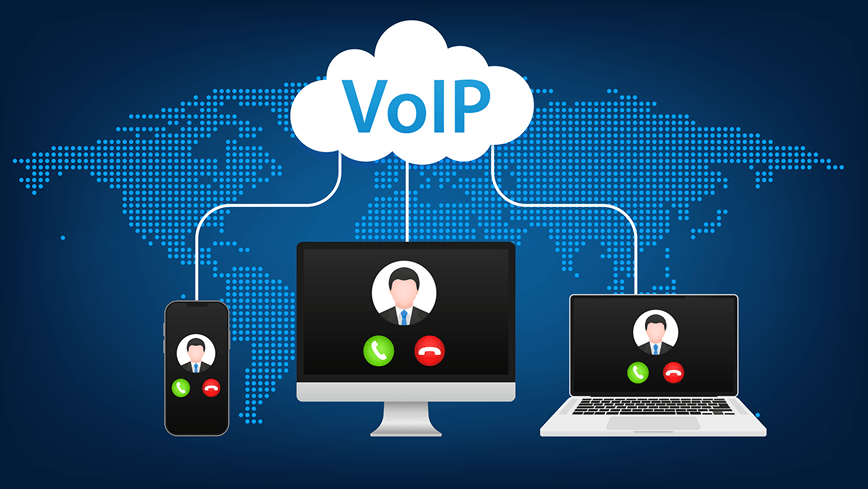
Voice over Internet Protocol, better known as VoIP, is transforming the way businesses communicate. By transmitting voice calls over the internet rather than traditional telephone lines, VoIP provides a flexible, cost-effective, and feature-rich alternative to legacy phone systems.
In this guide, we’ll explore what VoIP is, how it works, its advantages for businesses, and why it’s quickly becoming the standard for modern communication.
What is VoIP?
VoIP (Voice over Internet Protocol) is a technology that allows users to make voice calls using a broadband internet connection instead of a conventional phone line. The audio is converted into digital data packets and transmitted over the internet.
This enables not just voice communication, but also video calls, file sharing, instant messaging, and more—all from a single system.
How Does VoIP Work?
VoIP works by:
- Converting your voice into digital signals
- Compressing the data
- Sending it over the internet
- Reconstructing it on the receiving end
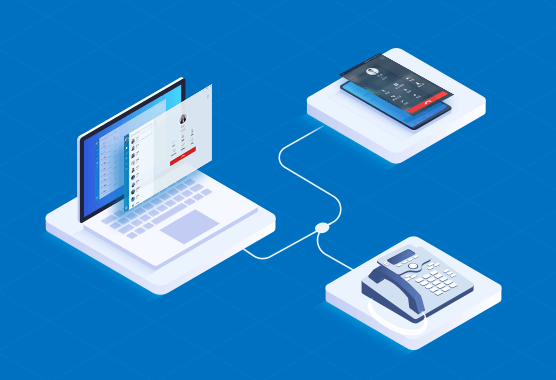
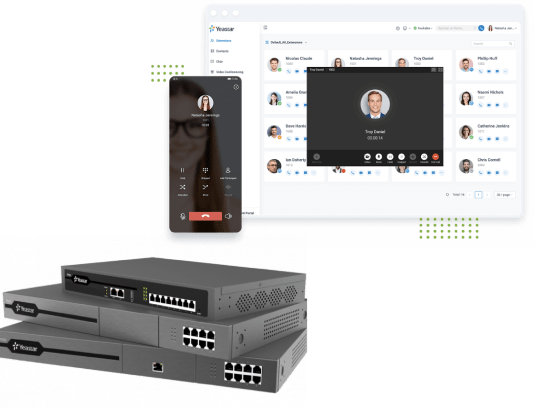
Devices such as SIP phones, softphones (software-based phones), or mobile VoIP apps are commonly used to access VoIP systems. VoIP can also be integrated with business tools like CRM software and email platforms for unified communication.
Key Benefits of VoIP for Businesses
1. Lower Costs
VoIP dramatically reduces the cost of local and international calls. It also eliminates the need for physical infrastructure, lowering operational expenses.
2. Mobility and Flexibility
Employees can make and receive calls from anywhere using their smartphone, laptop, or desktop. This is especially useful for businesses with remote or hybrid workforces.
3. Advanced Features
VoIP systems offer features such as call forwarding, voicemail-to-email, conference calling, video conferencing, auto-attendant, and real-time call analytics.
4. Scalability
Easily add or remove users and features as your business grows—without needing new lines or hardware.
5. Integration with Business Tools
VoIP can sync with CRM platforms, calendars, helpdesk software, and other systems to enhance productivity and customer service.
A major strength of VoIP technology lies in its ability to provide a flexible, cost-effective, and feature-rich platform that meets the diverse needs of today’s businesses. Its flexibility allows staff to work from virtually anywhere with internet access, supporting dynamic work arrangements and enhancing collaboration. Teams across multiple locations can stay connected using the same VoIP infrastructure, reducing the fragmentation caused by disjointed communication tools.
VoIP’s cost-effectiveness goes beyond cheap call rates. By eliminating the need for expensive PBX hardware and minimizing maintenance costs, businesses can allocate budgets more efficiently. Additionally, VoIP’s pay-as-you-go or subscription-based pricing models provide financial predictability for companies of all sizes.
Being feature-rich, VoIP systems go far beyond traditional voice calling. Tools like call analytics offer valuable insights into team performance, while CRM integration boosts sales and service productivity. Custom greetings, IVR menus, call queues, and virtual numbers are all features that add professionalism and streamline operations—making VoIP not just a tool for communication, but a driver of business growth.
VoIP vs Traditional Phone Systems
Feature | VoIP | Traditional Phones |
Installation Cost | Low | High |
Call Charges | Internet-based (cheaper) | Per-minute billing |
Features | Advanced (CRM, video, analytics) | Basic calling only |
Mobility | High | Office-bound |
Scalability | Easy and fast | Limited by hardware |
Who Should Use VoIP?
VoIP is ideal for:
- Small businesses looking for budget-friendly phone solutions
- Remote and hybrid teams needing mobile access
- Customer service and sales teams that require call tracking and CRM integration
- Companies aiming to future-proof their communication systems
Implementation Tips
- Assess Network Readiness: Ensure your internet connection has enough bandwidth and stability to support multiple concurrent VoIP calls. Use tools to test for jitter, latency, and packet loss. If needed, upgrade your internet service or invest in business-grade routers to prioritize voice traffic using QoS (Quality of Service).
- Choose a Reliable Provider: Look for providers that guarantee at least 99.9% uptime and offer responsive technical support. Consider whether you need a local provider for better regional support or a global provider for international scalability. Always review customer feedback, available features, and integration capabilities before committing.
- Pick Compatible Devices: Make sure the devices you choose—such as SIP-enabled phones, headsets, or VoIP apps—are compatible with your provider’s platform. Softphones can be a cost-effective option for remote teams, while dedicated IP phones offer better audio quality and call control features.
- Train Your Team: Organize onboarding sessions to familiarize your staff with the new VoIP system. Cover core functions like transferring calls, accessing voicemail, setting up call forwarding, and using mobile apps. Provide written guides or videos for ongoing reference.
- Plan a Gradual Rollout: Instead of switching all users at once, test the system with a small group first. Use their feedback to fine-tune settings, address issues, and prepare the rest of the team for a smooth transition.
- Implement Security Measures: Protect your VoIP network with strong passwords, encryption protocols, and firewall rules. Consider enabling two-factor authentication for administrator accounts and monitoring call logs for unusual activity. Help employees get comfortable with new features and tools.
FAQs About VoIP
Is VoIP secure?
Yes. VoIP providers use encryption and security protocols to protect calls and data.
Do I need a special phone for VoIP?
No. You can use IP phones, mobile apps, or softphones installed on a computer.
Can I keep my current number?
Yes. Most VoIP providers support number porting.
Does VoIP work during power outages?
Not always. Backup power supplies or call forwarding to mobiles are recommended.
Conclusion
VoIP is more than just a phone system—it’s a modern communication solution designed for the digital age. With lower costs, greater flexibility, and powerful features, VoIP is an essential upgrade for businesses looking to improve efficiency and support remote work.
Ready to take the next step? Explore our VoIP Solutions for Business today.